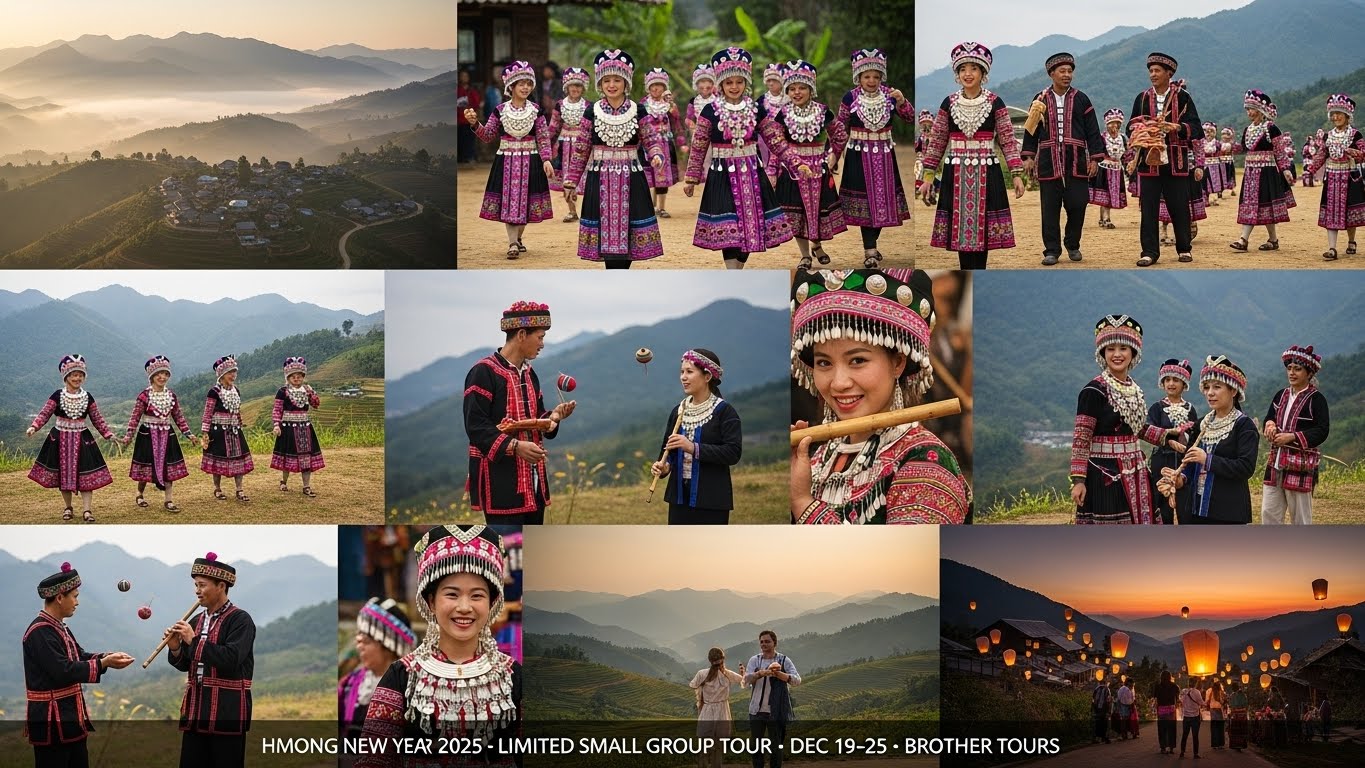
In a world dominated by the Gregorian calendar, where January 1st signals a fresh start for billions, another New Year celebration exists, one that follows the rhythm of the harvest and the phases of the moon. It is a festival of vibrant colors, intricate textiles, soulful bamboo music, and ancient courtship rituals. This is the Hmong New Year, known in the native tongue as Nor 30 (or Noj Peb Caug).
For travelers in the United States and Australia, the question “What is Hmong New Year?” often arises when they see images of silver-adorned dancers or hear about massive community gatherings in places like California or Minnesota. Is it just a party? A religious event? A dating game?
The answer is complex and beautiful. The Hmong New Year celebration is the single most important cultural event for the Hmong people, serving as a Thanksgiving, a spiritual renewal, and a massive family reunion all rolled into one. Whether you are curious about attending the Long Beach Hmong New Year or are an intrepid traveler looking to experience the authentic Hmong New Year in Laos, understanding the depth of this festival reveals a rich tapestry of history and heritage.
The Essence of Hmong New Year: More Than a Date
So, what exactly is it? At its core, the Hmong New Year festival marks the end of the agricultural cycle. Traditionally, Hmong people were farmers living in the highlands of Southeast Asia and Southern China. Life revolved around the rice and corn harvest. Once the crops were gathered and stored for winter, the hard labor was finished.
The New Year was the designated time to rest. The name Noj Peb Caug translates literally to “Eat Thirty,” referring to the ritual feast that traditionally included meat (often pork) and rice cakes, prepared to honor the spirits and ancestors. It signifies:
- Thanksgiving: Gratitude for the year’s harvest.
- Renewal: Casting away the bad luck of the old year and welcoming the good luck of the new one.
- Reunion: Bringing together extended clans who lived in scattered mountain villages.
Unlike Western holidays fixed to specific dates, the New Year Hmong festivities traditionally begin on the first day of the waxing moon in the 12th lunar month, typically falling in November or December.
The Spiritual Dimension: Hu Plig (Soul Calling)
Before the public festivities begin, the celebration starts at home. The Hmong believe in animism and ancestor worship. A crucial part of “what is Hmong New Year” involves the Hu Plig or soul-calling ceremony.
The head of the household performs rituals to call back the wandering souls of family members. It is believed that souls can wander off due to shock, illness, or sadness. The New Year is the time to reunite the soul with the body to ensure health and prosperity for the coming year. Families also sweep their homes to physically and spiritually cleanse the space of lingering bad fortune.
Iconic Traditions: What You Will See
Whether you are in a stadium in Fresno or a dusty village square in Hmong New Year Laos celebrations, certain elements define the festival. These traditions are visually stunning and deeply symbolic.
The Ball Toss (Pov Pob)
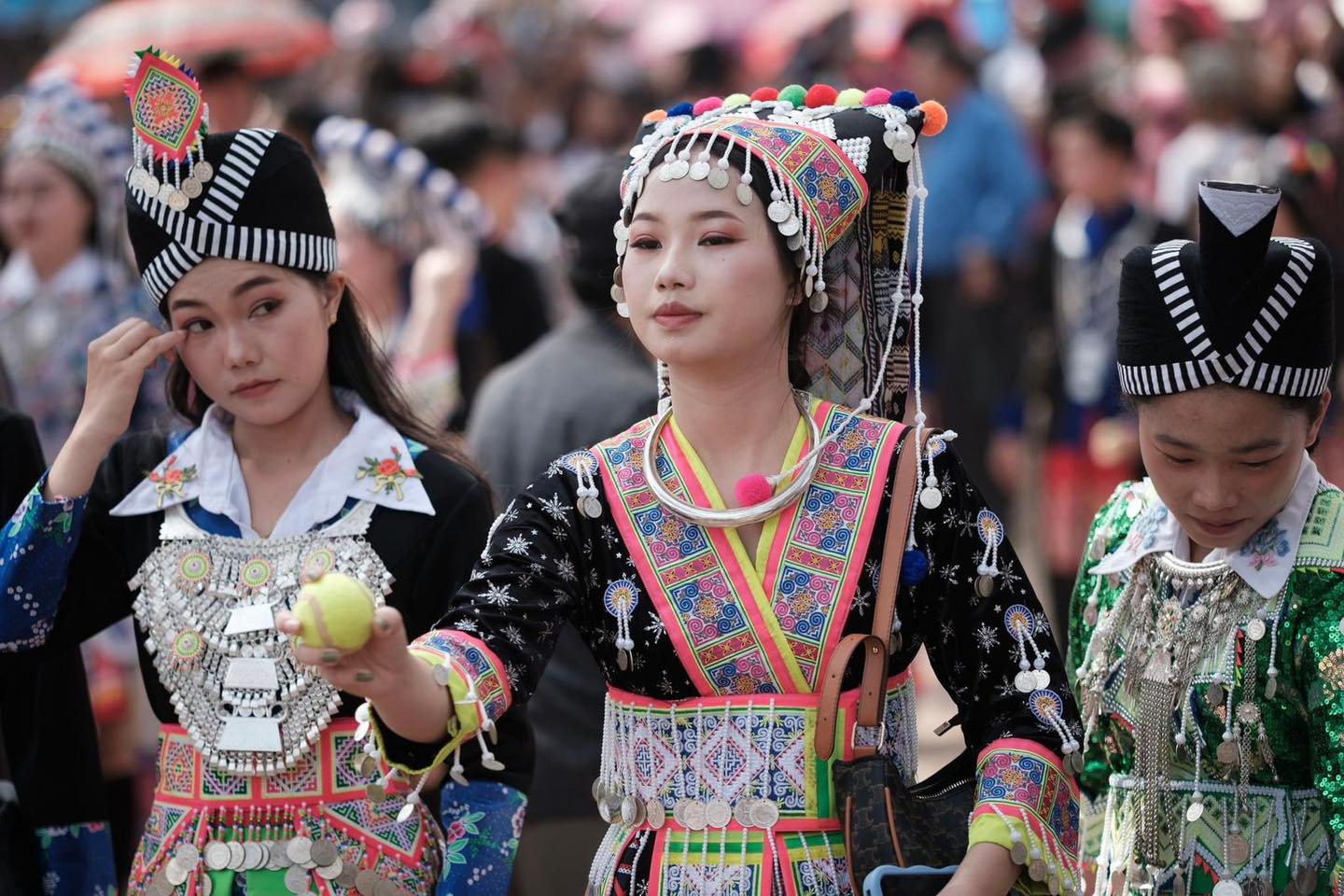
If you search for images of the festival, you will inevitably see rows of young men and women facing each other, tossing a small cloth ball back and forth. This is Pov Pob.
Historically, Hmong villages were isolated. Young people worked hard in the fields and had few chances to socialize. The New Year was the only time they were free from work and allowed to court openly. The ball toss is a matchmaking game.
- The Rules: Boys and girls line up in facing rows. They toss the ball to someone they are interested in.
- The Interaction: If you drop the ball, you often have to give the thrower a small ornament or sing a song (kwv txhiaj). This playful penalty allows for conversation, flirting, and singing poetic verses.
- The Significance: While modern dating apps have changed romance, the ball toss remains a cherished symbol of Hmong identity. It represents the continuity of the clan and the hope for future families.
The Clothing: A Wearable History
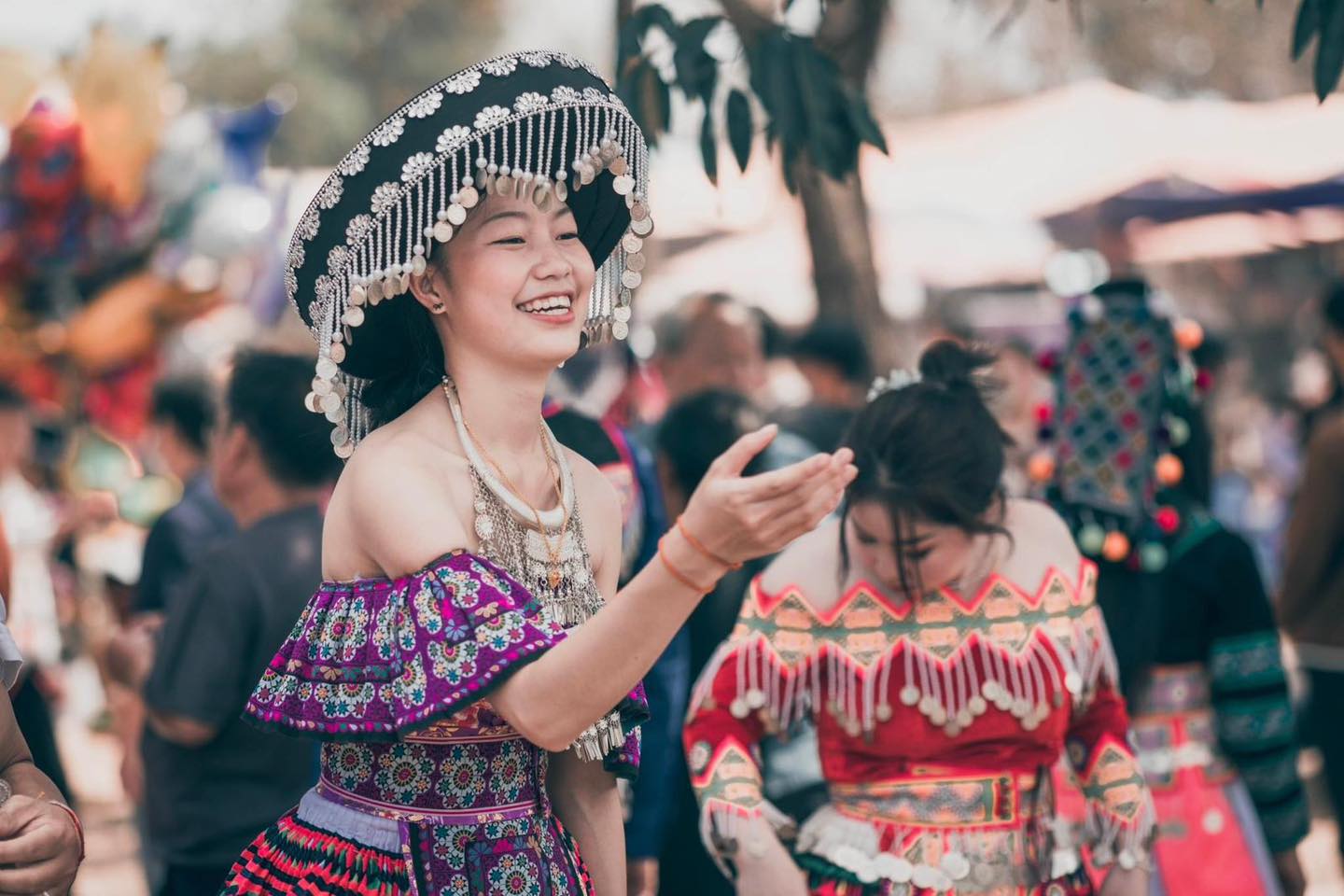
You cannot answer “what is Hmong New Year” without talking about the clothes. Attendees don their finest traditional attire. These are not costumes worn for a show; they are intricate expressions of identity.
Hmong groups are often distinguished by the color and style of their clothing (e.g., Green Hmong, White Hmong). The outfits feature:
- Embroidery (Paj Ntaub): Complex geometric patterns often sewn by hand, representing symbols from Hmong folklore and nature.
- Silver Jewelry: Heavy silver neck rings, coin sashes, and dangling ornaments are worn to signify wealth and ward off evil spirits. The jingling sound of silver is the soundtrack of the festival.
- Hemp and Indigo: Traditional fabrics made from hemp and dyed with natural indigo are still prized, especially in authentic Hmong New Year in Laos celebrations.
Bullfighting and Top Spinning
In traditional settings, particularly in Laos, the festival includes competitive games.
- Bullfighting: Unlike Spanish bullfighting, Hmong bullfighting pits two bulls against each other in a test of strength. It is rarely fatal and ends when one bull runs away.
- Top Spinning: Men and boys compete to see whose wooden top can spin the longest or strike an opponent’s top the hardest. It is a display of skill and dexterity.
Global Celebrations: From the Mekong to the Mississippi
The Hmong diaspora is vast, with large communities in the USA, France, and Australia following the Secret War in Laos (1960s-70s). As a result, the Hmong New Year celebration has evolved into two distinct experiences.
The Western Experience: Unity in Diaspora
In the United States and Australia, the New Year has transformed into a massive cultural preservation event.
- Locations: Major events include the Long Beach Hmong New Year in California, and large festivals in St. Paul, Minnesota, and Fresno, California.
- Atmosphere: These events feel like state fairs mixed with cultural pageants. You will find beauty contests (Miss Hmong New Year), dance competitions featuring modern and traditional styles, and hundreds of vendors selling Hmong sausage, papaya salad, and herbal medicines.
- Timing: Dates are often adjusted to fit Western weekends or holidays (like Thanksgiving) to ensure maximum attendance.
- Audience: It is a place for the younger generation to reconnect with their roots and for the older generation to pass down traditions.
The Authentic Experience: Hmong New Year in Laos
For travelers asking “what is Hmong New Year” in its purest form, the answer lies in the mountains of Laos.
- Locations: Luang Prabang, Xieng Khouang, and remote villages in Oudomxai and Nong Khiaw.
- Atmosphere: The Hmong New Year Laos experience is raw and intimate. There are no stadiums. The ball toss happens in open fields against a backdrop of limestone karsts. The food is cooked over open fires. The connection to the ancestors feels palpable.
- Timing: It strictly follows the harvest and lunar calendar, usually occurring from mid-December to early January.
Why Cultural Travelers Should Experience It
For anthropology enthusiasts, photographers, and travelers seeking “deep travel,” the Hmong New Year festival is a bucket-list event. It offers a rare glimpse into a culture that has maintained its distinct identity despite centuries of migration and adversity.
Photography and Visual Storytelling
Visually, the festival is a masterpiece. The contrast of the bright neon pinks, greens, and reds of the clothing against the dusty earth tones of a village provides incredible photographic opportunities. The portraits of elders with their deep lines and silver jewelry tell stories of resilience.
Cultural Immersion
Attending a New Year Hmong event in Laos is not just about watching; it’s about participating. In smaller villages, visitors are often invited to join the feast, drink homemade rice wine, or try their hand at tossing the ball. It breaks down the barrier between “tourist” and “local.”
Planning Your Trip: Hmong New Year Booking 2025
If this article has piqued your interest, you might be wondering how to experience it yourself. Whether you are aiming for a domestic trip or an international expedition, planning is key.
For the USA and Australia
If you want to attend festivals like the Long Beach Hmong New Year, tickets are usually affordable and available at the gate. However, for the larger events in Fresno or Minnesota, checking community Facebook pages or local Hmong association websites in late 2024 is the best way to get confirmed dates.
For Travel to Laos
Experiencing Hmong New Year in Laos requires more logistical planning. Since the exact dates depend on the lunar calendar and the harvest, they can shift slightly each year.
- Best Time to Go: Aim for mid-December to early January.
- How to Book: Look for specialized Hmong New Year Booking 2025 tours. Standard travel agencies often miss the local village schedules. You need a specialist who has relationships with the local clan leaders.
A Note on Responsible Tourism
When visiting authentic celebrations in Laos:
- Dress Modestly: While the festival is colorful, village culture is conservative.
- Ask Permission: Always ask before taking photos, especially of children or spiritual rituals.
- Support Local: Buy textiles and crafts directly from the villagers. This income directly supports the artisans who keep these traditions alive.
Deep Dive: An 8-Day Immersion Example
To truly understand “what is Hmong New Year,” consider an immersive itinerary rather than a day trip. High-quality cultural tours, like the 8-Day Hmong New Year Cultural Immersion Tour, offer a structured way to dive deep.
Imagine an itinerary that doesn’t just drop you at a festival but guides you through the entire context:
- Day 1-2: Arrive in Luang Prabang and attend a workshop on Hmong textile symbols before heading to the first festival opening.
- Day 3-5: Travel to Nong Khiaw and Oudomxai, visiting remote “Team Farms” where opium crops have been replaced by sustainable agriculture—a modern chapter of Hmong history.
- Day 6: A 4×4 adventure into the highlands to visit seven ancient villages, witnessing distinct dialect groups and their specific New Year rituals.
- Day 7: Returning via high-speed train, blending the ancient past with the modern reality of Laos.
This type of travel transforms a simple vacation into a profound educational journey.
Conclusion
So, what is Hmong New Year? It is a survival story told through joy. It is a declaration of identity sewn into every stitch of a hemp skirt. It is a bridge connecting the scattered Hmong diaspora back to the mountains of Southeast Asia.
For the Hmong grandmother in Fresno, it is a memory of home. For the young man in Luang Prabang, it is a chance to find love. And for the global traveler, it is an invitation to witness one of the world’s most vibrant and resilient cultures at its absolute peak.
As you look toward Hmong New Year Booking 2025, consider stepping out of your own calendar and stepping into the rhythm of the Nor 30. Whether in a bustling American city or a quiet Lao village, the spirit of the celebration is waiting to welcome you.
Ready to Experience the Magic of Nor 30?
Don’t just read about the traditions—live them. Explore our exclusive Hmong New Year Laos cultural packages and secure your place for the upcoming festival season. Spaces for the 2025 immersion tours are limited. Contact us today to start your journey.