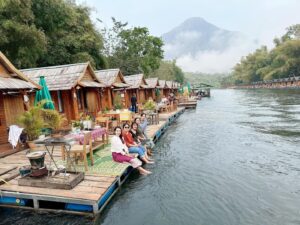
Laos is a country where time seems to move at a gentler pace. Often overshadowed by its more frenetic neighbors, this landlocked nation holds a quiet, profound beauty that extends far beyond its physical landscapes. For the curious traveler, the real magic lies in the deep-rooted traditions that pulse through every village, temple, and market.
To visit Laos is to step into a living museum where the past is not just remembered; it is enacted daily. Saffron-robed monks walk in silent procession at dawn, intricate silk patterns tell stories of ancestors, and festivals turn quiet towns into riots of color and sound. These are the cultural delights of Laos, a tapestry woven from spirituality, artistry, and an unshakeable sense of community.
If you are ready to look beyond the surface, this guide will take you deep into the heart of Lao heritage, exploring the customs and crafts that define this enchanting land.
The Legacy of Luang Prabang: A Spiritual Centerpiece
No discussion of Lao culture can begin without Luang Prabang. Designated a UNESCO World Heritage site, this city at the confluence of the Mekong and Nam Khan rivers is the spiritual heart of the nation. It is not merely a collection of old buildings; it is a testament to the fusion of traditional Lao architecture with European colonial influences.
A Walk Through History
Walking through the peninsula of Luang Prabang feels like traversing two worlds simultaneously. You stroll past French colonial villas with their shuttered windows and expansive balconies, now converted into boutique hotels and cafes. Yet, just next door, the golden spires of ancient wats (temples) pierce the canopy of palm trees.
The Wat Xieng Thong (Temple of the Golden City) is the crown jewel here. Built in 1560, its sweeping roofs sweep low to the ground, a classic example of the Luang Prabang style. The intricate “tree of life” mosaic on its rear wall is a masterpiece of glass art that glimmers in the afternoon sun. It is a place of quiet contemplation where you can observe young novices sweeping the temple grounds or studying ancient texts.
Royal Echoes
The Royal Palace Museum offers a more secular, yet equally significant, glimpse into the past. Once the residence of King Sisavang Vong, it has been preserved exactly as it was when the monarchy was dissolved in 1975. Inside, you will find the Phra Bang, the sacred golden Buddha image for which the city is named. The throne room, with its walls covered in glass mosaics, reflects the grandeur of a bygone era. Walking these halls gives you a profound sense of the royal heritage that once governed these lands.
The Baci Ceremony: Binding Souls Together
One of the most heartwarming cultural delights of Laos is the Baci (or Soukhwan) ceremony. This animist ritual predates Buddhism but has become seamlessly integrated into Lao Buddhist practice. It is based on the belief that the human body consists of 32 organs, each inhabited by a spirit or “khwan.” When a person is ill, stressed, or traveling far, these spirits can wander off, causing imbalance.
The Ritual Experience
A Baci is held for almost every significant life event: births, weddings, welcoming guests, or recovering from illness. The ceremony centers around the pha khuan, a flower arrangement typically made from banana leaves and marigolds. A village elder or a former monk, known as the mo phon, chants mantras to call the wandering spirits back to the body.
The most touching moment comes at the end. Participants take white cotton threads and tie them around your wrists while whispering blessings of health, prosperity, and long life. You might find yourself with dozens of strings on your wrists by the end of the ceremony. These strings are not just souvenirs; they are tangible symbols of the community’s care for you. Tradition dictates you should keep them on for at least three days to ensure the blessings take hold. It is an intimate, emotional experience that instantly connects you to the people around you.
Festivals of Light, Water, and Sound
Lao people love to celebrate, and their calendar is punctuated by festivals (Boun) that revolve around agriculture, religion, and the lunar cycle. These festivals are loud, joyous, and deeply communal affairs.
Boun Bang Fai: The Rocket Festival
Imagine a festival where homemade rockets, some carrying kilograms of gunpowder and decorated with dragon heads, are fired into the sky to wake up the rain gods. This is Boun Bang Fai, usually held in May just before the planting season.
It is a raucous event filled with music, dance, and plenty of local rice wine (lao-lao). Teams from different villages compete to see whose rocket flies the highest. The “losers”—those whose rockets fail to ignite or crash—are often thrown into the mud in good-natured jest. It is a thrilling display of engineering ingenuity and ancient superstition, ensuring the rains come to nourish the rice paddies.
Boun Ok Phansa and the Festival of Light
In October, marking the end of Buddhist Lent, the rivers of Laos come alive during Boun Lai Heua Fai (Festival of the Fire Boats). Towns, particularly Luang Prabang, are illuminated by thousands of candles. Locals construct large “fire boats” made of bamboo and colored paper, lit from within by candles, and parade them through the streets before launching them onto the Mekong.
Simultaneously, individuals release small banana-leaf boats (krathongs) carrying flowers, incense, and candles. This act symbolizes letting go of negative thoughts, bad luck, and grudges from the past year. Watching the dark river glitter with thousands of tiny lights is a serene, almost otherworldly experience that embodies the spiritual depth of Lao culture.
Pi Mai: The Lao New Year
Celebrated in mid-April, Pi Mai is a three-day explosion of water. While it shares similarities with Thailand’s Songkran, the Lao version often feels more traditional. Statues of the Buddha are temporarily removed from temples to be washed with perfumed water by the faithful.
On the streets, it is a playful water fight. Being soaked with water is a blessing, washing away the bad luck of the old year to start the new one fresh. It is impossible to stay dry, and equally impossible to stay serious. It is a time of pure, unadulterated joy.
Silk Weaving: A Story in Every Thread
For centuries, Lao women have passed down the art of silk weaving from mother to daughter. This is not merely a domestic chore; it is a high art form and a significant economic driver. The cultural delights of Laos are often wearable, and Lao textiles are among the finest in the world.
The Village of Ban Phanom
Just outside Luang Prabang lies Ban Phanom, a village famous for its weavers who once produced textiles for the royal court. Here, you can hear the rhythmic clacking of wooden looms from almost every house. The weavers use techniques like continuous supplementary weft (chok) to create patterns that look like embroidery but are actually woven into the fabric.
Motifs and Meanings
Every pattern has a meaning. A diamond motif might represent the protective eyes of the ancestors; a river serpent (Naga) represents fertility and protection from water spirits. When you buy a handwoven sinh (traditional skirt) or a scarf, you are buying a piece of folklore.
The process is incredibly labor-intensive. It begins with raising silkworms, extracting the delicate fibers, spinning the thread, dyeing it with natural colors derived from indigo, jackfruit wood, or insect secretions, and finally weaving. A complex piece can take months to complete. Visiting a weaving center is not just a shopping trip; it is an education in patience and precision.
Culinary Traditions: The Flavor of a Nation
One cannot speak of culture without speaking of food. Lao cuisine is distinct—herbaceous, spicy, and centered around one staple: sticky rice (khao niao). In fact, Lao people often refer to themselves as luk khao niao, or “children of sticky rice.”
The Ritual of Sticky Rice
Eating in Laos is a tactile experience. You eat sticky rice with your hands, balling it up and using it to scoop up dips (jeow) and salads. It is a communal act; meals are almost always shared.
Signature Dishes
The national dish is Laap (sometimes spelled Larb), a minced meat salad flavored with lime juice, fish sauce, fresh herbs (mint, cilantro, spring onions), and toasted ground rice powder, which gives it a signature nuttiness and crunch. It can be made with chicken, pork, fish, or beef and is a masterclass in balancing sour, salty, and spicy flavors.
Another staple is Tam Mak Hoong (papaya salad). Unlike its sweeter Thai cousin, the Lao version is savory and pungent, heavily seasoned with fermented fish sauce (pa dek). It is fiery hot and incredibly addictive.
The Morning Alms and Markets
For a true culinary insight, visit a morning market. Unlike tourist night markets, these start at dawn and are where locals shop. You will see tables piled high with river weed (kai pen), buffalo skin, exotic mushrooms, and bamboo shoots. It is a sensory overload of smells and sights that grounds you in the local agricultural lifestyle.
Traditional Arts and Architecture: Wood and Wat
Beyond textiles, Lao craftsmanship shines in wood carving and temple architecture. The “Luang Prabang Style” of temples is distinct for its multi-tiered roofs that sweep low, almost touching the ground, intended to mimic the curve of a bird’s wing.
The Art of Stenciling
Many temples are adorned with gold stenciling on red lacquer. This technique portrays scenes from the Jataka tales (stories of the Buddha’s past lives) or daily village life. Restoring and maintaining these artworks is a constant process, keeping the skills of local artisans alive.
In villages, you might encounter basket weaving, where bamboo is turned into sticky rice containers (tip khao) or fish traps. These items are functional, yet they possess a simple, elegant beauty that speaks to a life lived in harmony with natural resources.
The Rhythm of Rural Life
Finally, the true culture of Laos is found in the rhythm of its rural areas, where the majority of the population lives. Life here follows the seasons of the rice harvest.
If you venture into the countryside—perhaps to the stunning 4,000 Islands (Si Phan Don) in the south or the rugged mountains of the north—you will see a different side of heritage. You might see villagers repairing fishing nets, drying coffee beans, or distilling rice whiskey.
In the northern hills, ethnic groups like the Hmong, Akha, and Khmu maintain their own distinct languages, clothing, and spiritual beliefs. The Hmong New Year, for example, is a spectacular display of courtship rituals and traditional ball-tossing games, where young men and women in elaborate silver jewelry and embroidered clothing meet potential partners.
Conclusion
The cultural delights of Laos are not always loud or flashy. They are found in the soft chant of a monk, the complex flavor of a spicy dip, the intricate geometry of a silk scarf, and the genuine warmth of a stranger tying a cotton string around your wrist.
Laos offers a reminder that culture is not static. It is a living, breathing entity that adapts while holding fast to its roots. Whether you are floating a lantern down the Mekong or learning to weave bamboo, you are participating in a story that has been told for centuries.
So, take your time. Adaptability and openness are your best travel companions here. Immerse yourself in the traditions, taste the heritage, and let the gentle spirit of Laos leave its mark on you. This is a journey that goes far beyond sightseeing; it is a journey of connection.